 Boxer briefs
 Trunks
 Briefs
 Sports boxers
 Loose fit boxers
 Multipacks


 Undershirts
 Longsleeves
 Tank tops
 Anti Perspiration T-shirts


 Dress socks
 Sneaker Socks
 Footies


 Underwear packs
 T-shirt packs
 Polo Packs
 Swim Trunks Packs
 Socks packs
 Boxer briefs packs
 Trunk packs
 Briefs packs
 Loose Fit Boxers Packs


 Briefs
 Bikini knickers
 Thongs
 Hipsters


 Tank tops
 Bralettes
 Camisoles


Patent on Mellowood
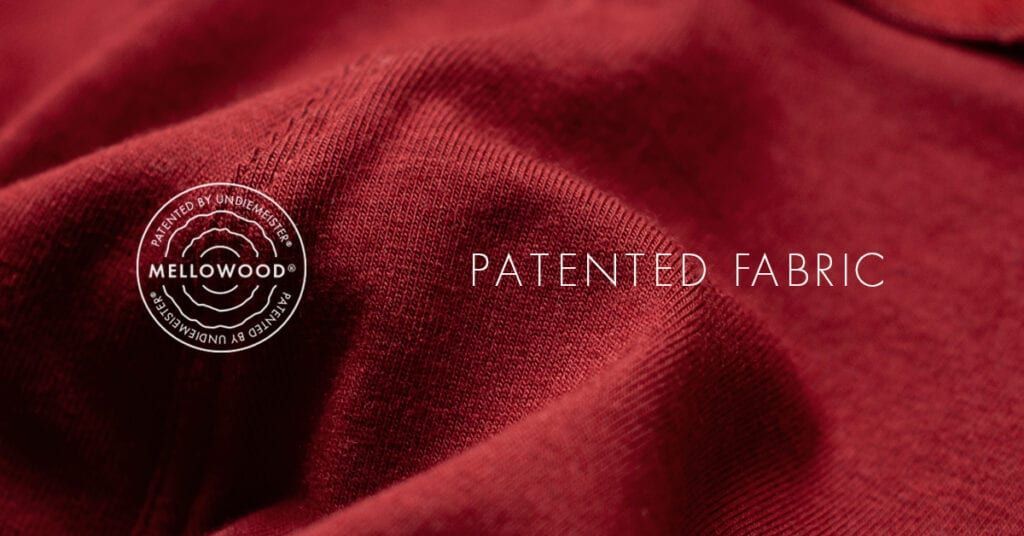
Mellowood patent: innovation or a logical step in sustainable clothing?
Sustainability is everywhere. From labels to marketing campaigns, every brand seems to be “green” today. But how do you know what is truly sustainable and what simply sounds good?
In a world where claims follow one another, Undiemeister takes a notable step. The brand has secured a patent for Mellowood: a fabric developed in-house. Not just a marketing name, but an officially registered innovation.
That raises questions. Why would you patent a fabric? And what does that say about sustainability?
From sustainable promise to tangible proof
The clothing industry is changing rapidly. Where sustainability was once a niche, it has now become the norm. At the same time, this growth also creates confusion. Materials such as cotton and bamboo are often positioned as eco-friendly, while in reality there are several limitations.
Cotton, for example, requires vast amounts of water and agricultural land. Bamboo sounds like a green alternative, but is often chemically processed into viscose, which reduces its true sustainability.
Consumers are becoming more critical and want not only compelling stories, but also evidence. In this landscape, there is room for genuine innovation – not just in communication, but in the product itself.
What makes Mellowood different?
Mellowood is not a standard fabric, but a carefully engineered combination of materials that enhance each other. By combining TENCEL™ Modal with organic cotton and a small amount of elastane, a balance is created between softness, flexibility and durability.
What you notice as a wearer is primarily comfort. The fabric feels soft against the skin, breathes well and retains its shape even after many washes. But behind that comfort lies a technical story that is just as important.
It’s not only about what you wear, but also how it is made.
The role of Lenzing and TENCEL™
A key component of Mellowood is TENCEL™ Modal, a fibre produced by the Austrian company Lenzing AG, globally recognised for its focus on sustainable textile innovation.
What sets TENCEL™ apart from traditional materials is its production process. The fibres are derived from wood sourced from sustainably managed forests and produced in a largely closed-loop system, where water and solvents are reused.
The result is a significantly lower environmental impact. And perhaps even more importantly, a process that is transparent and verifiable.
Why a patent matters
A patent may sound technical or legal, but it primarily reflects differentiation. In a market where many products look alike, it shows that something genuinely new has been developed.
For Mellowood, this means its composition and properties are protected. It is not just a mix of materials, but a unique blend that is not easily replicated.
This also helps prevent confusion in a market where terms like “sustainable” and “premium” are widely used.
Sustainability without the noise
What stands out is that Mellowood does not rely on big marketing claims. Sustainability is built into its foundation: in the choice of raw materials, the production process and the product lifespan.
This means less water usage, more efficient production and garments that last longer.
And that may well be the most underestimated form of sustainability.
A more honest alternative to cotton and bamboo
The comparison with cotton and bamboo is inevitable. These are the most common materials in underwear and basics. Yet they also highlight how complex sustainability can be.
Cotton is natural, but resource-intensive. Bamboo grows quickly, but is often chemically processed.
With TENCEL™ and Mellowood, the aim is to bridge that gap between perception and reality.
Innovation as the new standard
The introduction of a patented fabric like Mellowood shows where the industry is heading. Less focus on individual materials, more on smart combinations and systems.
It is no longer just about “which material do you use?”, but “how does everything work together?”.
Innovation is no longer the exception, but increasingly the standard.
More than just a fabric
Ultimately, it’s not about the patent itself, but what it enables. Comfort throughout the day. Clothing that retains its shape and quality. And a production process that takes the world around us into account.
Mellowood is therefore not an endpoint, but a step in a broader evolution.
Experience it yourself
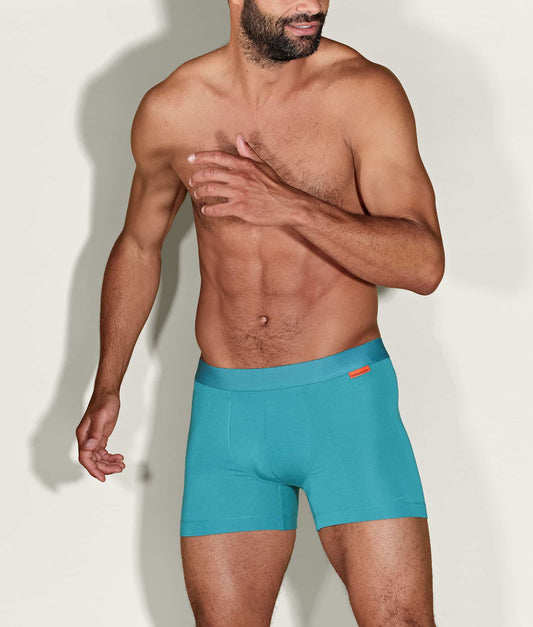
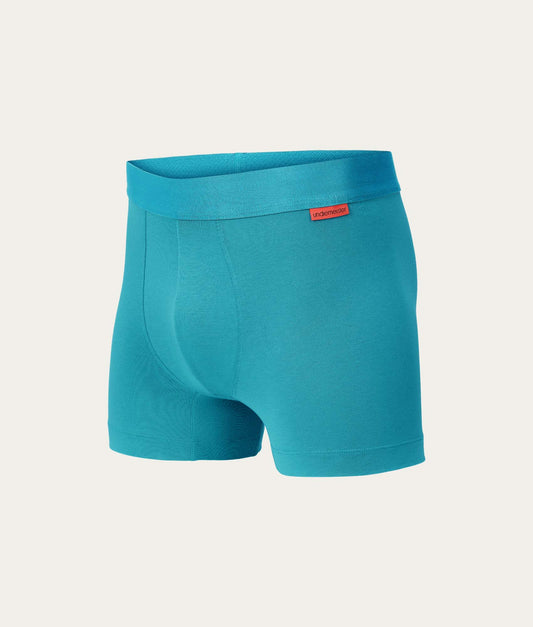
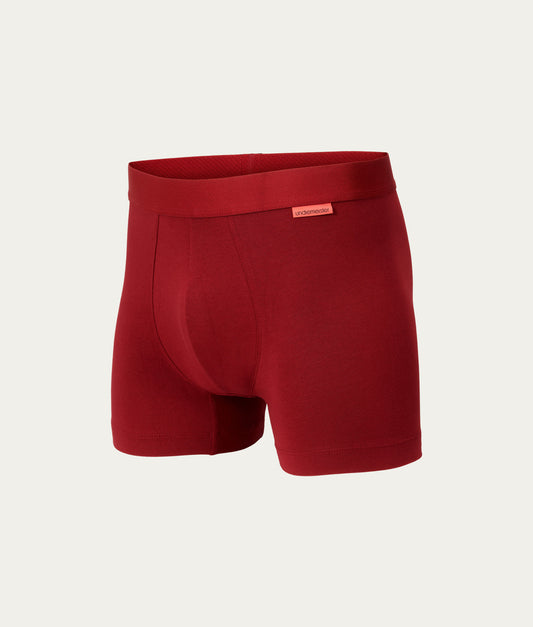
Curious about the difference? Mellowood is used in various Undiemeister products, such as boxer briefs, T-shirts and socks.
You can also find more background information on materials and sustainability on the website.



Conclusion
A patent on a fabric may seem like a small detail, but it says a lot about the direction of the clothing industry. Less focus on marketing, more on substance. Fewer promises, more proof.
And that is exactly where the difference is made.


