 Boxer briefs
 Trunks
 Briefs
 Sports boxers
 Loose fit boxers
 Multipacks


 Undershirts
 Longsleeves
 Tank tops
 Anti Perspiration T-shirts


 Dress socks
 Sneaker Socks
 Footies


 Underwear packs
 T-shirt packs
 Polo Packs
 Swim Trunks Packs
 Socks packs
 Boxer briefs packs
 Trunk packs
 Briefs packs
 Loose Fit Boxers Packs


 Briefs
 Bikini knickers
 Thongs
 Hipsters


 Tank tops
 Bralettes
 Camisoles


Which fabric doesn't make you sweat? These are the best materials for hot days

Are you wondering which fabric doesn't make you sweat? Then you're probably familiar with that unpleasant feeling of a warm T-shirt sticking to your skin or underwear that no longer feels fresh after a few hours. Especially on hot days or during an active day, you want clothes that stay cool, wick away moisture, and help prevent unpleasant odours.
Fortunately, not all fabrics make you sweat equally quickly. Some materials are highly breathable and wick away moisture quickly, while others actually trap heat. In this guide, you’ll discover which fabric makes you sweat the least, which materials you should avoid, and which underwear is most comfortable to wear if you tend to sweat a lot.
Which material makes you sweat the least?
How much you sweat isn't determined solely by temperature or physical activity. The fabric of your clothing also plays a major role. Materials vary greatly in terms of breathability, moisture absorption, and how quickly they dry.
Wool
Although wool is often associated with winter, fine merino wool is surprisingly well-suited for warmer conditions. The fibers absorb a lot of moisture without feeling wet and help regulate body temperature.
That is why merino wool is often used for hiking, cycling, and sportswear.
Linen
Linen is one of the most breathable natural materials. Its open structure allows heat to escape easily and air to circulate freely through the fabric.
The downside is that linen wrinkles easily and is less elastic, making it less suitable for underwear.
Bamboo
Bamboo feels soft and absorbs moisture well. However, most bamboo clothing is made from viscose fibers produced through a chemical process. As a result, the final properties vary greatly depending on the manufacturer.
Bamboo can be comfortable to wear, but it isn't necessarily better than other high-quality cellulose fibers.
TENCEL™ Modal
TENCEL™ Modal is one of the best materials if you want to sweat as little as possible. The fibers quickly absorb moisture, wick it away efficiently, and feel cool for a long time.
In addition, TENCEL™ Modal stays fresh longer because moisture doesn't build up in the fabric as quickly. That is precisely why this material is widely used in premium underwear.


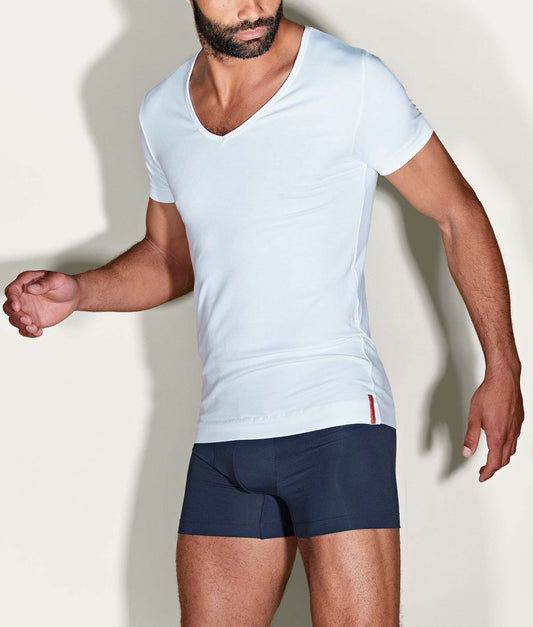
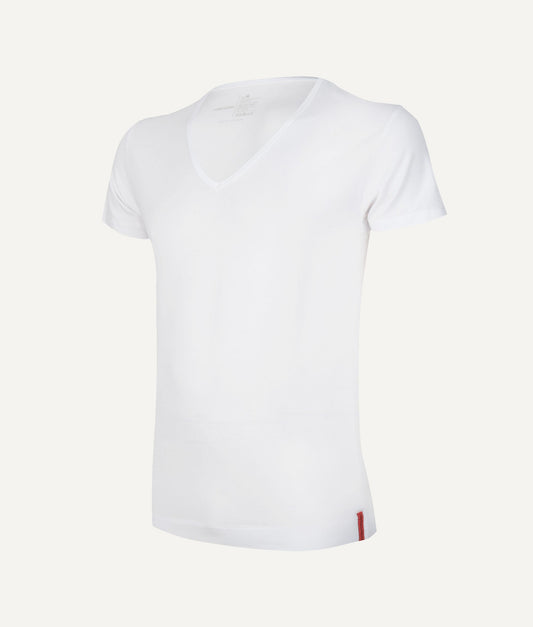
Which fabrics are most likely to make you sweat when it's hot?
Not every fabric wicks away heat equally well. Some materials actually trap heat and moisture, which makes you feel clammy more quickly.
Synthetic fabrics such as polyester and polyamide
Polyester and sweat are a popular combination, and for good reason. Polyester absorbs very little moisture. As a result, sweat often remains on the skin until it evaporates.
Furthermore, with heavy use, polyester can retain odours more quickly because bacteria adhere more easily to the fibers.
The same applies to polyamide: the fabric absorbs very little moisture. Polyamide is strong and durable, but on hot days it feels less breathable than natural or cellulose fibers.
Cotton
Many people think that cotton is the best choice for managing sweat. However, there are also drawbacks to cotton underwear. Cotton absorbs a lot of moisture but dries relatively slowly. As a result, wet clothing stays in contact with the skin for longer. This can feel less comfortable, especially with underwear.
Why do you sweat more in some fabrics than in others?
The main differences lie in the fiber structure. Some fibers absorb moisture immediately and distribute it throughout the fabric, allowing it to evaporate more quickly. Other materials, on the other hand, allow moisture to remain on the skin.
In addition, air circulation, fabric thickness, the way the fibers are woven, and moisture regulation play an important role.
That is another reason why search terms such as “does viscose make you sweat,” “does rayon fabric make you sweat,” “does Modal make you sweat,” and “does TENCEL™ fabric make you sweat” differ significantly from one another. Although viscose, rayon, and Modal are all cellulose fibers, they are produced in different ways. TENCEL™ Modal, in particular, stands out for its excellent moisture management and breathability.
Which type of underwear causes the least sweating?
With underwear, in particular, you can quickly tell the difference between materials. Underwear sits directly against the skin and is constantly exposed to sweat. But what is the best fabric for underwear?
Underwear made from TENCEL™ Modal wicks away moisture faster than traditional cotton, so it stays dry and fresh for longer. This makes it particularly suitable for hot days, exercise, or whenever you sweat a lot.
Want to know more? Then check out our blog post on which underwear helps with sweating.
Sweating isn’t the problem; moisture that lingers is. That’s why we developed Mellowood: TENCEL™ Modal quickly wicks away moisture, organic cotton keeps it soft, and elastane helps everything stay in place. A fabric needs to perform on a hot day, not just on paper.
Are you looking for high-quality solutions? Then check out our collections of anti-sweat underwear for women and anti-sweat shirts for men.
Removing Sweat Stains and Odours from Clothing
Are you still bothered by body odour or sweat stains? If so, wash your clothes as soon as possible according to the care label instructions. It’s best not to leave sweaty clothes in the laundry basket for days on end.
Use a suitable detergent, avoid using too much fabric softener, and let your clothes dry thoroughly before storing them.
Be sure to check out our tips on washing underwear and find out how to prevent sweat stains.
However, the best way to stay cool starts with the right fabric. High-quality materials like TENCEL™ Modal help wick away moisture more quickly, keeping your clothes comfortable for longer.
Frequently asked questions
Which fabric makes you sweat the least?
Which fabric smells when you sweat?
Which makes you sweat more, viscose or polyester?
Which fabric does not smell when you sweat?
Can't find your question?
Available now · weekdays 08:30–17:00


